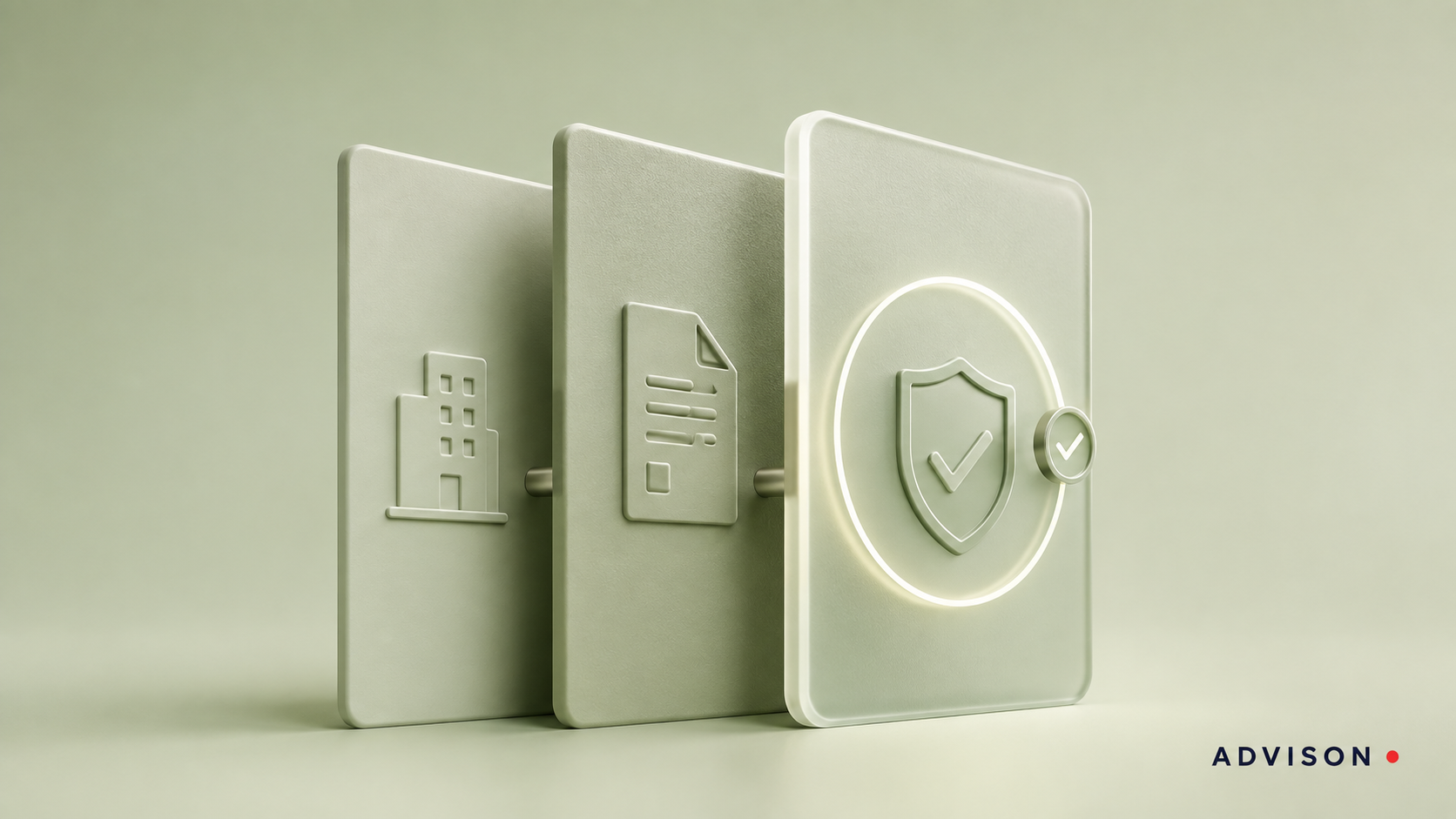
The practical difficulty is that even an IČ DPH does not always prove full VAT-payer status. Slovakia also assigns VAT identification numbers under limited registration regimes for specified EU acquisitions and services. Before issuing an invoice or treating an EU supply as VAT-free, verify both the number and the legal registration type.
The short answer
IČO is the Slovak organisation identification number. It identifies a legal person or entrepreneur in public and commercial registers. DIČ is the domestic tax identification number assigned by the Slovak Financial Administration. A DIČ does not mean that the company is registered for VAT.
IČ DPH is the Slovak VAT identification number. In English business language, “Slovak VAT number” and “Slovak VAT ID” normally mean the same thing as IČ DPH. For a standard Slovak number, the visible EU format is SK followed by ten digits.
However, an IČ DPH does not always prove full VAT-payer status. A full payer registered under Section 4 or Section 5 of the Slovak VAT Act has the ordinary payer regime, including a right to deduct qualifying input VAT. A person registered only under Section 7 or 7a receives an IČ DPH for defined cross-border transactions but does not thereby become a full VAT payer and has no general input-VAT deduction right.
The three Slovak company identifiers at a glance
Three different numbers
IČO · DIČ · IČ DPH
IČO
Identifikačné číslo organizácie
The legal person or entrepreneur in public & commercial registers.
Assigned by: Ministry of Interior (registration authority).
DIČ
Daňové identifikačné číslo
The taxpayer for Slovak tax administration (not a VAT number).
Assigned by: Slovak Financial Administration.
IČ DPH
Identifikačné číslo pre DPH
VAT registration — the „Slovak VAT number”.
Assigned by: Slovak tax authority.
„Slovak VAT number” and „Slovak VAT ID” normally mean the IČ DPH — but holding an IČ DPH does not always mean full VAT-payer status.
The format is a useful clue, not proof of status. Verify the company name, number and registration type in the official registers.
What is IČO?
IČO is the organisation identification number used to identify Slovak legal persons, entrepreneurs and other registered organisations. A Slovak s.r.o. normally receives an eight-digit IČO during the registration process. The founders do not usually file a separate application solely for that number.
The current Register of Legal Entities Act places assignment of the identifier with the Ministry of Interior. This is a 2026 freshness point: older pages may still say that the Statistical Office or the Commercial Register itself assigns every IČO. The Statistical Office continues to operate statistical registers and use IČO as the unique identifier in organisational statistics, while the source-register workflow supplies the relevant company data.
IČO identifies the entity; it does not describe its tax position. It does not prove that the company has a DIČ, is a VAT payer, has no tax debt or may apply a particular VAT treatment.
A change of shareholder, managing director, company name or registered office does not create a new legal entity. The IČO therefore normally remains unchanged. It can be checked in the Register of Legal Entities and, for companies entered there, the Slovak Commercial Register.
What is DIČ?
DIČ is the Slovak domestic tax identification number. For a legal person entered in the Commercial Register, income-tax registration is generally performed automatically from Register of Legal Entities data. The Financial Administration guidance states that the tax administrator registers such a legal person within 30 days after receiving the data and assigns a DIČ for dealings with the tax administrator.
A Slovak company DIČ is commonly a ten-digit number. It is used in domestic tax administration and appears in tax records and business documentation. But it is not, by itself, a VAT number.
The clean test is simple:
IČO answers: Which entity is this?
DIČ answers: Which taxpayer record is this?
IČ DPH answers: Which VAT registration is being used for this transaction?
A newly incorporated s.r.o. can therefore have an IČO and DIČ while remaining outside VAT registration.
What is IČ DPH?
IČ DPH is the Slovak identification number for value added tax. The standard EU presentation is the country prefix SK followed by ten digits, for example SK2021234567. The tax authority assigns it when a person is registered under the relevant provisions of the Slovak VAT Act.
An IČ DPH is used on VAT invoices where the VAT Act requires the supplier’s or customer’s VAT number under which the relevant supply is made or received. It is also used in EU VAT reporting and validation. Its existence proves that a VAT identifier has been allocated; the registration category determines what the holder may and must do.
For help obtaining the right status, see ADVISON’s VAT registration service and its guide to voluntary VAT registration for a new Slovak company.
Slovak VAT number and IČ DPH are normally the same thing
“VAT number” is the English commercial term. “IČ DPH” is the Slovak legal and administrative term for the VAT identification number. They are not two separate registrations.
The common mistake is different: people translate DIČ as “VAT number” because DIČ is a tax number. In Slovakia, DIČ and IČ DPH have different functions. Use “tax ID” or “TIN” for DIČ, and “VAT ID” or “VAT number” for IČ DPH.
Having an IČ DPH does not always mean being a full VAT payer
This is the distinction that matters for invoicing, deductions and due diligence.
Full VAT payer under Section 4 or Section 5
Section 4 contains the principal domestic full-payer rules. Section 5 deals with relevant foreign persons carrying out taxable activities in Slovakia. Special group rules also exist, but they do not change the basic point.
A full VAT payer generally:
charges Slovak output VAT where Slovak VAT is due;
may deduct qualifying input VAT when the statutory conditions are met;
files VAT returns and, where required, control and recapitulative statements;
uses its IČ DPH on supplies and purchases in accordance with the applicable VAT rule.
Full-payer status does not mean every invoice contains Slovak VAT. Exemptions, reverse charge, intra-EU supply rules, exports and place-of-supply rules may produce a different result.
Registration under Section 7
Section 7 applies to certain persons that are not full VAT payers when they acquire goods in Slovakia from another EU Member State. The principal calendar-year threshold is EUR 14,000, with a possibility to opt into registration below it. The tax office assigns an IČ DPH, normally within ten days after receiving the application.
The official Financial Administration guidance on VAT registration is explicit: Section 7 registration does not make the person a VAT payer. The person must account for Slovak VAT on the relevant intra-EU acquisition but has no right to deduct that tax under the general full-payer regime.
Registration under Section 7a
Section 7a typically applies before a Slovak-established non-payer receives or supplies specified business-to-business services from or to another EU Member State where the general B2B place-of-supply and reverse-charge rules apply. There is no value threshold for that registration trigger.
The person receives an IČ DPH and uses it for the covered cross-border services. But registration under Section 7a does not make it a full VAT payer. A recipient generally pays Slovak VAT on the relevant received service without the ordinary full-payer deduction right. A supplier of covered services reports them as required, commonly through a recapitulative statement.
Practical conclusion: ask for the registration type, not merely the number. A valid IČ DPH may belong to a Section 4 or 5 payer, a VAT group, or a person with a limited Section 7 or 7a registration.
Practical examples
Scenario 1 – New Slovak s.r.o. not registered for VAT
The company is incorporated and entered in the Commercial Register. It has an IČO and receives a DIČ through tax registration. It has no IČ DPH. It issues commercial invoices without presenting itself as a Slovak VAT payer and must monitor whether later transactions trigger Section 4, 7 or 7a.
Scenario 2 – Slovak s.r.o. registered as a full VAT payer
The company has IČO, DIČ and IČ DPH. It applies the correct VAT treatment to each transaction, files the required VAT reports and may deduct eligible input VAT subject to the statutory conditions. The VAT number does not replace its IČO on commercial documents.
Scenario 3 – Slovak company registered under Section 7a
The company buys online advertising or consultancy from an EU supplier, or supplies a covered B2B service to an EU customer. It receives an IČ DPH for those transactions but remains a non-payer for ordinary domestic supplies. It must not begin adding Slovak VAT to all domestic invoices or claim a general right to deduct input VAT merely because VIES validates the number.
Scenario 4 – Foreign company registered for Slovak VAT
A foreign company may become a Slovak VAT payer under Section 5 and receive a Slovak IČ DPH without being incorporated as a Slovak legal entity. It therefore need not have a Slovak IČO unless it also has a Slovak branch or another registration that receives one. Other Slovak tax identifiers depend on its tax-registration position; verify the tax-office record rather than inferring them from the VAT number.
How can I verify whether a Slovak company is a VAT payer?
Use more than one source and follow this order:
Identify the legal entity. Check the name, IČO, registered office and statutory representatives in the Commercial Register or Register of Legal Entities.
Check the Slovak VAT register. Search the Financial Administration’s list of persons registered for VAT. The current list includes the IČ DPH or registration number, IČO if assigned, type of registration and relevant registration dates.
Validate cross-border use through VIES. Use the European Commission’s VIES checker before relying on a number for an intra-EU transaction.
Match the data. Compare the company name, address, IČO, DIČ, IČ DPH and effective dates with the contract and invoice.
Investigate ambiguity. A recent registration may not yet be reflected everywhere. An invalid VIES result can mean that the number does not exist, is not activated for intra-EU transactions, is not finalised or has not yet propagated. Do not guess.
VIES is a European Commission search engine drawing data from national VAT databases; it is not an independent company database. A valid result confirms cross-border VAT information at the time of the check. It does not prove that the company has no tax debt, has filed every return, owns a bank account, has genuine economic activity or is safe to acquire.
For a ready-made company, save a dated VIES result but also perform tax, accounting and corporate due diligence. ADVISON publishes current options for VAT-registered ready-made Slovak companies and explains how buying a ready-made company works.
Which number should appear on an invoice?
Start with the legal basis and the transaction, not a generic invoice template.
IČO. Section 3a of the Slovak Commercial Code requires an entrepreneur to state its business name, registered office or place of business, legal form and IČO, if assigned, on written or electronic business letters and orders, together with register details where applicable. A commercial invoice is normally treated as part of the company’s business documentation, so the company should include its IČO and current register details.
DIČ. DIČ identifies the taxpayer and is commonly shown on Slovak invoices and accounting documents. It is required in dealings with the tax administrator. But Section 74 of the VAT Act does not list DIČ as a separate mandatory element of a standard VAT invoice simply because the supplier has one.
IČ DPH. A VAT invoice under Section 74 must state the supplier’s VAT identification number under which it made the supply and, where relevant, the customer’s VAT identification number under which the supply was received. The invoice must also contain the other statutory items, including the sequence number, supply and issue dates, description, taxable amount, VAT rate or exemption and required wording such as “reverse charge”.
A Section 7 or 7a registrant should use its IČ DPH only in the legally relevant transactions. It should not charge Slovak VAT on ordinary domestic sales or describe itself as a full VAT payer merely because it holds the number. For intra-EU supplies, the presence of two VAT numbers does not automatically make the invoice VAT-free: customer status, movement of goods, place of supply, evidence and the applicable exemption or reverse-charge rule must all be satisfied.
Common mistakes foreign entrepreneurs make
What to avoid
Common mistakes
Calling IČO a tax number instead of the organisation identifier.
Translating DIČ as „VAT number”.
Assuming every incorporated Slovak company is automatically VAT registered.
Treating every IČ DPH holder as a full VAT payer with a deduction right.
Relying only on VIES and not checking the Slovak registration type.
Copying a related company’s identifiers onto an invoice.
Leaving an old name, address or status in accounting software after a change.
Treating a ready-made purchase as a personal transfer of its IČO / DIČ / IČ DPH.
What changes after buying a ready-made company?
In a share purchase, the same company remains in existence. Its IČO and DIČ therefore remain with the company. An existing IČ DPH also remains with that company while the VAT registration continues; the number is not reassigned personally to the new shareholder or director.
A shareholder or managing-director change does not, by itself, create new identifiers. But the buyer must still:
confirm the VAT registration type and effective status in the Slovak list and VIES;
review historic VAT returns, control statements, recapitulative statements and tax correspondence;
check tax debts, audits, risk listings and registered bank accounts where relevant;
update invoice templates, accounting master data and authorised users;
ensure that the new management or representative can access the Financial Administration portal;
avoid invoicing until the correct company and VAT data have been confirmed.
For the broader tax context, see How Is a Slovak s.r.o. Taxed in 2026?. If the business needs a company that is already a full payer, compare the available Slovak ready-made VAT companies with a new VAT registration application.
Need help identifying the correct Slovak tax registration?
Get the setup right
Start with ADVISON
Ready-made VAT company
Need a company that already holds a valid IČ DPH? A verified VAT-registered ready-made s.r.o. — with proper acquisition due diligence.
See ready-made companiesVirtual office in Nitra
Every s.r.o. needs a registered office tied to its identifiers. A compliant Nitra seat with mail handling — no physical premises required.
Get a Nitra virtual officeTell ADVISON:
whether you already have a Slovak company;
the company’s IČO, DIČ and any IČ DPH;
whether you will trade domestically, across the EU or with third countries;
the expected goods, services and customer types;
whether you need full VAT registration or only a specific cross-border registration;
whether the company is newly incorporated or acquired as a ready-made company.
ADVISON can then identify which registration route and compliance setup should be assessed. Contact ADVISON or review its VAT registration service. The final VAT treatment of an invoice remains transaction-specific.
This article provides general information and is not a substitute for transaction-specific tax or legal advice.